Older homes and lead plumbing
If your house predates the mid-1980s, that is worth knowing about. The fix is targeted: reverse osmosis at the tap you drink from, not a whole-house filter.
Chapel Hill has a lot of older housing, and that changes which water problem matters most. In a house built before the mid-1980s, the plumbing itself is worth thinking about as carefully as the water arriving at it.
It is also the one town in our footprint in Orange County, and the properties out toward the county line are frequently on private wells.
We confirm the supplier and the source water at the test rather than assuming, because Orange County is served differently from the Wake County towns.
What does not change is the plumbing question. Lead rarely comes from a treatment plant. It comes from lead service lines, solder used before 1986 and brass fixtures, which makes the age of the house the thing that matters.
A whole-home carbon filter does not remove lead. Reverse osmosis at the kitchen tap does. If lead is your specific concern, test at your own faucet.
We confirm your supplier and your source water during the free test rather than assuming it from your address.
If your house predates the mid-1980s, that is worth knowing about. The fix is targeted: reverse osmosis at the tap you drink from, not a whole-house filter.
A utility report describes the water leaving the plant. It cannot tell you what your own pipes add on the way to your glass. That is what an in-home test is for.
Outside town, private wells are common and the problem set changes to iron, sulfur, sediment and pH. Different systems entirely.
Systems that suit Chapel Hill
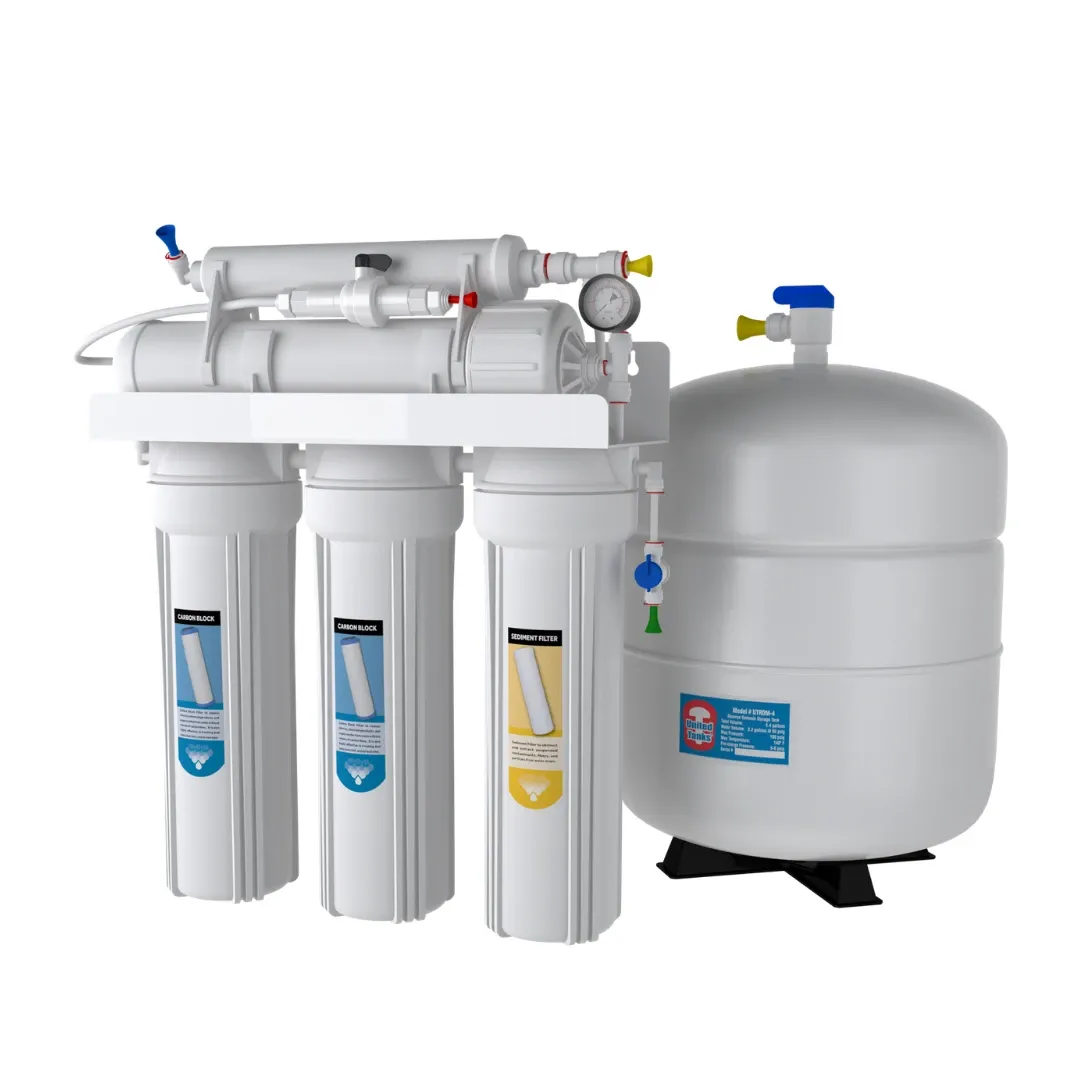
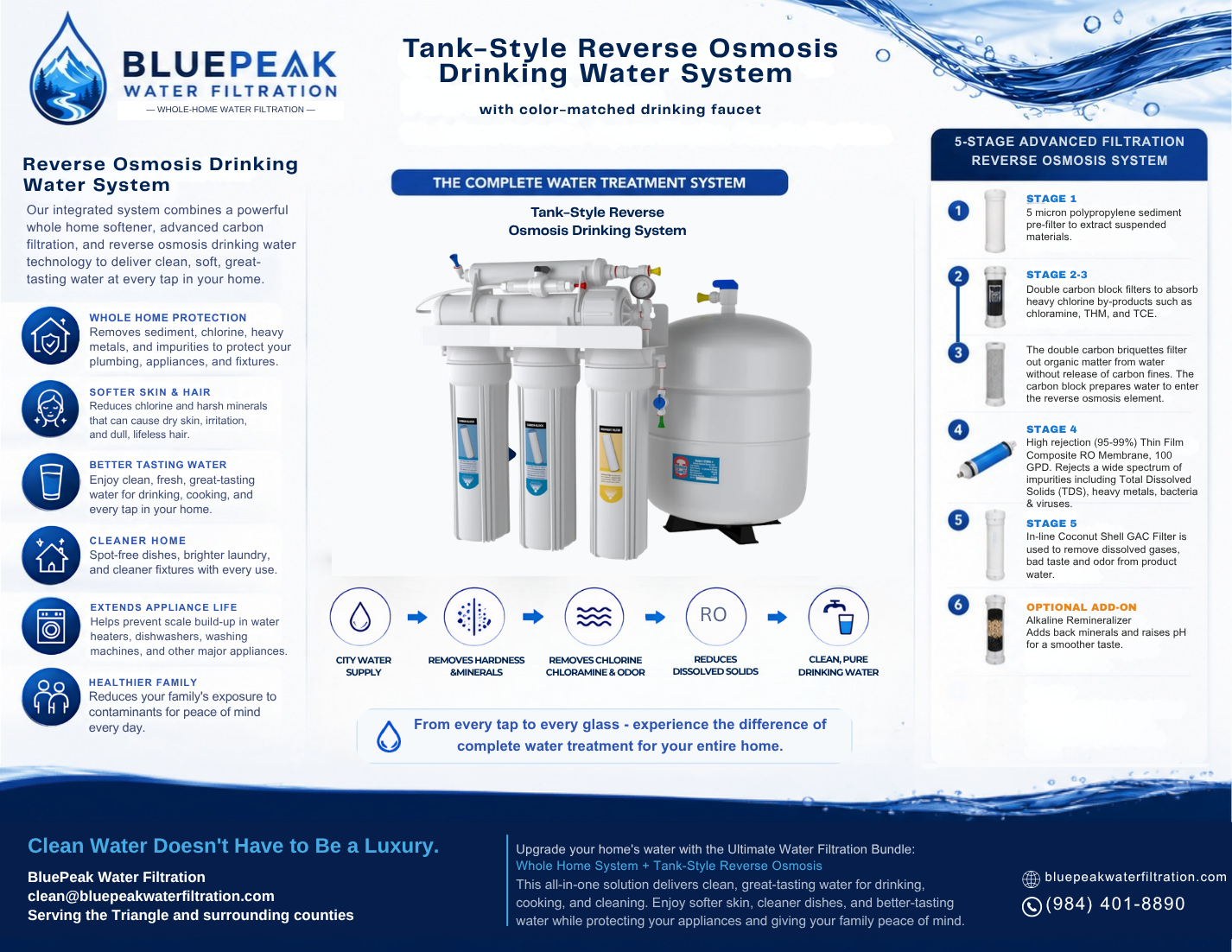
5-stage under-sink reverse osmosis drinking water, 100 gallons per day. Alkaline remineralizer add-on available.
Regular price$1,537Sale price$999
Installed
35% off — ends September 30, 2026
Brochure — Reverse Osmosis — Tank-Style (5-Stage)Spec sheet — Reverse Osmosis — Tank-Style (5-Stage)
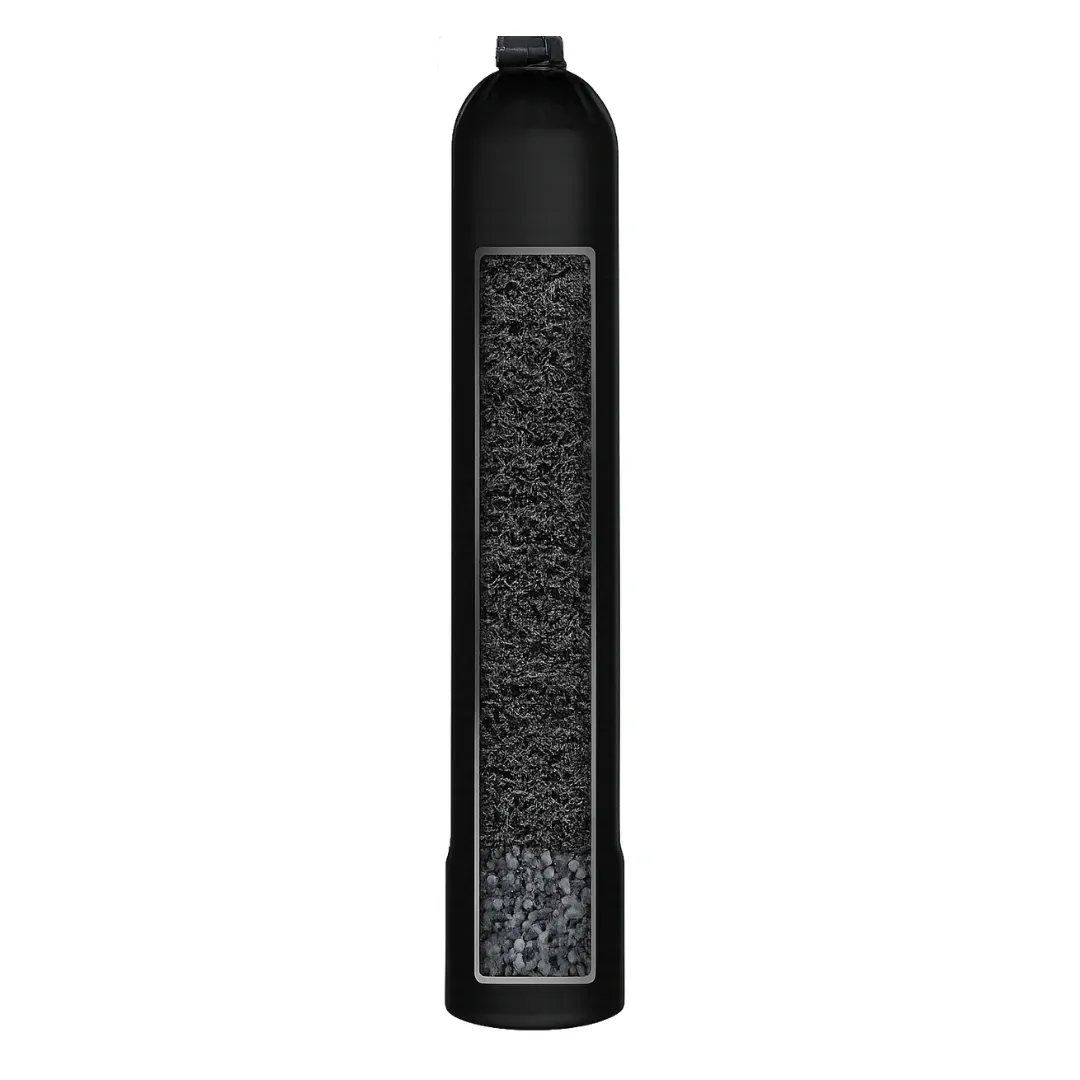
Removes chlorine, chloramine, taste and odor — no salt, no valve, no electricity. Does not soften.
Regular price$3,614Sale price$2,349
Installed
35% off — ends September 30, 2026
Free reverse osmosis drinking system included
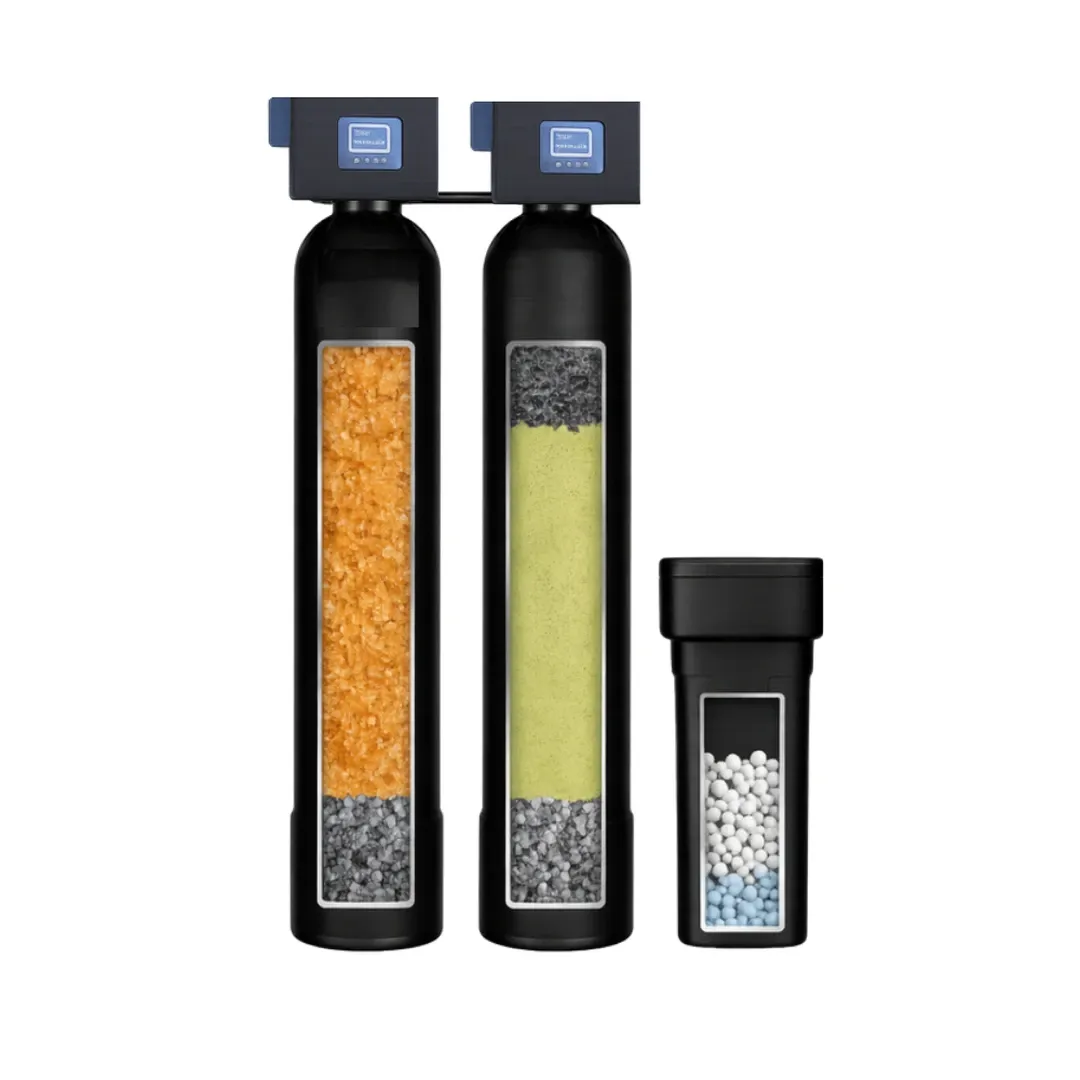
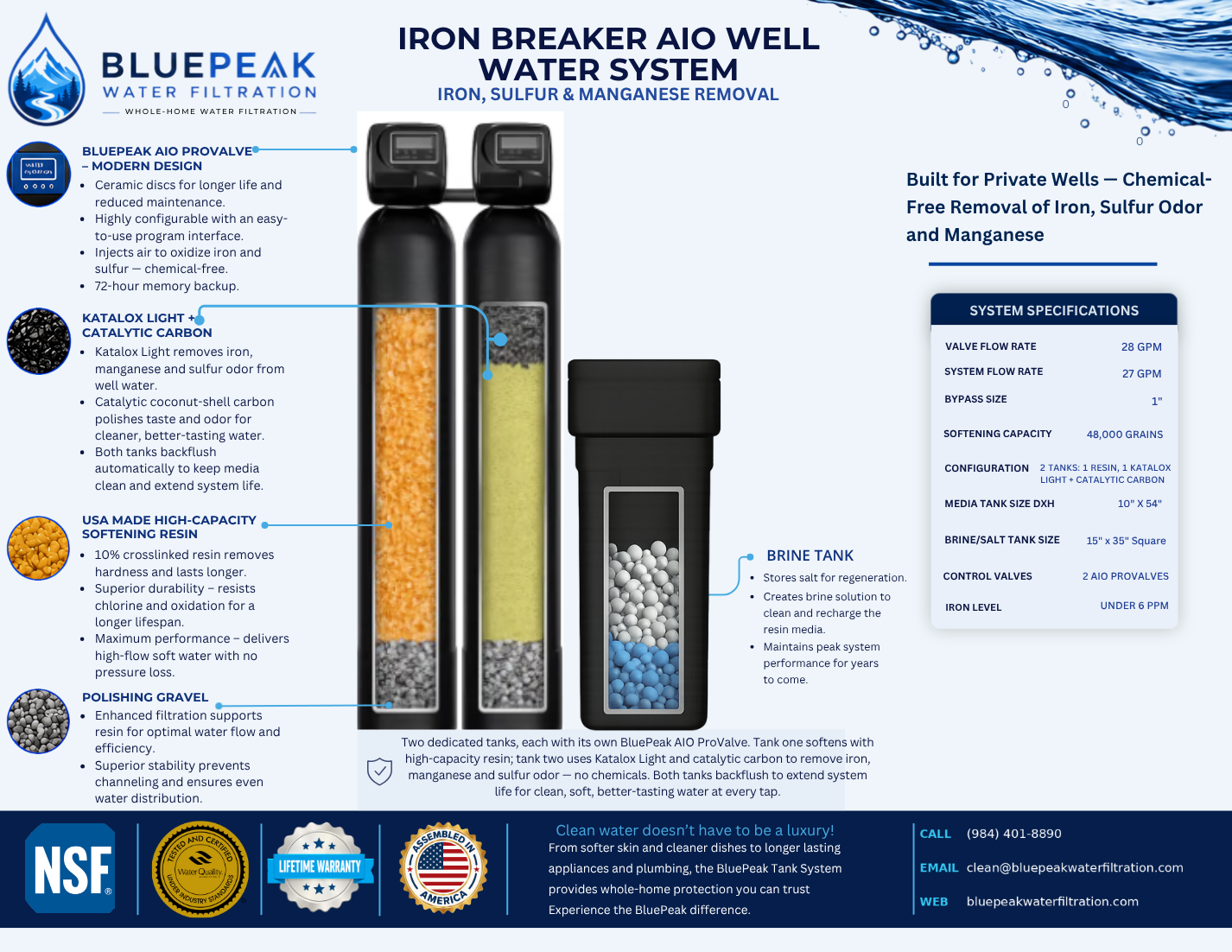
Chemical-free well-water system that clears iron, sulfur odor and hardness (iron under 6 ppm).
Regular price$6,146Sale price$3,995
Installed
35% off — ends September 30, 2026
Free reverse osmosis drinking system included
Brochure — Iron Breaker AIO (Dual Tank)Spec sheet — Iron Breaker AIO (Dual Tank)
All prices are for a garage or accessible waterline install. Crawl space, attic, outside or trenching installs add a $399 minimum, quoted on-site before any work begins.
Whole-home treats every drop entering the house — showers, laundry, dishwasher, ice maker. Reverse osmosis treats a small volume very thoroughly at one tap, usually the kitchen sink, for drinking and cooking. They’re complements, not competitors. Whole-home handles chlorine, sediment, iron and smell. RO handles dissolved solids and lead at the tap you drink from. That’s why every whole-home system we sell includes an RO system free.
Yes. We come to your home, test at your kitchen sink, and show you the results while we're standing there. No fee, no obligation, no PDF emailed to you three days later. It takes about fifteen minutes.
Yes, and it's a meaningful share of what we do. Wells in Wake, Harnett, Chatham and Johnston counties commonly come back with iron, hydrogen sulfide, sediment or low pH. Those need genuinely different equipment than a city water home — which is why we test first instead of quoting off a price list.
Most whole-home systems are a half day. A reverse osmosis drinking system under the sink is usually two to three hours. If you need both, plan on one full day.
Fifteen minutes at your kitchen sink, results while we are standing there, and no obligation. If your water is fine, we will tell you that.
Branden or someone on the team will call or text shortly to schedule your free water test. Need us sooner? Call or text (984) 401-8890.
Please try again in a moment, or call or text (984) 401-8890 and we will book your test by hand.