Iron
The most common well complaint we see. Dissolved iron oxidises once it meets air, which is why the staining shows up on laundry, in sinks and around fixtures rather than in the glass.
Well water
A city water home has one job to solve. A well can have four at once, arriving together and needing to be handled in stages. That is why we test before we quote instead of reading off a price list.
Wells are a meaningful share of what we do, especially in the outer counties. If you are on a well an hour outside the city, you are exactly who we are set up for.
Start here
Rarely one thing on its own. Most wells we test come back with two or three of these together, and the order you treat them in matters as much as the equipment.
The most common well complaint we see. Dissolved iron oxidises once it meets air, which is why the staining shows up on laundry, in sinks and around fixtures rather than in the glass.
The rotten-egg smell. It is produced by bacteria in low-oxygen groundwater and it is extremely common in North Carolina wells. Not usually a health hazard at residential levels, but it is unpleasant, it can corrode plumbing, and it will not clear on its own.
Sand, silt and grit. Abrasive, and the quiet killer of everything downstream: the pump, the pressure tank, valve seats and any treatment media you put in after it.
Acidic water is common in North Carolina groundwater. It slowly dissolves copper plumbing, and it can pull copper, lead and other metals out of your own pipes into the water.
Not present in every well, and not something you can taste or see. It is the reason annual testing matters even when nothing seems wrong.
Unlike metro municipal supply, well water here can be genuinely hard. We have tested wells in Harnett County and the surrounding areas at 25 grains per gallon and higher.
Work backwards
Find the symptom, read across. Your test confirms which of these is actually happening at your house, and how much of it.
| What you notice | What causes it | What fixes it |
|---|---|---|
| Orange or reddish staining on laundry, sinks and fixtures | Dissolved iron | Iron Breaker AIO below 6 ppm of iron, Peroxide Injection above it |
| Rotten-egg smell, often worst in the hot water | Hydrogen sulfide from bacteria in low-oxygen groundwater | Oxidation at the point of entry, by air injection or peroxide injection |
| Grit in aerators, short pump life, equipment wearing out early | Sand, silt and sediment | Pre-Sediment Filter, installed ahead of everything else |
| Blue-green staining in sinks and tubs | Low pH corroding copper plumbing | Calcite Neutralizer, usually corrected before anything else in the chain |
| Scale on fixtures, soap that will not rinse, spotting on glassware | Hardness, which on a well can be severe | Softening, included in both dual-tank well systems |
| Bacteria present on a water test | Surface contamination, or a shallow or older well | Whole House UV, installed after sediment filtration so the water is clear |
Iron is the one that decides your system. Below 6 ppm, air injection handles it with no chemicals to refill. Above 6 ppm, air injection cannot keep up and peroxide injection is the right build. Both are dual-tank systems, so the choice is about your iron number, not about tank count.
The well lineup
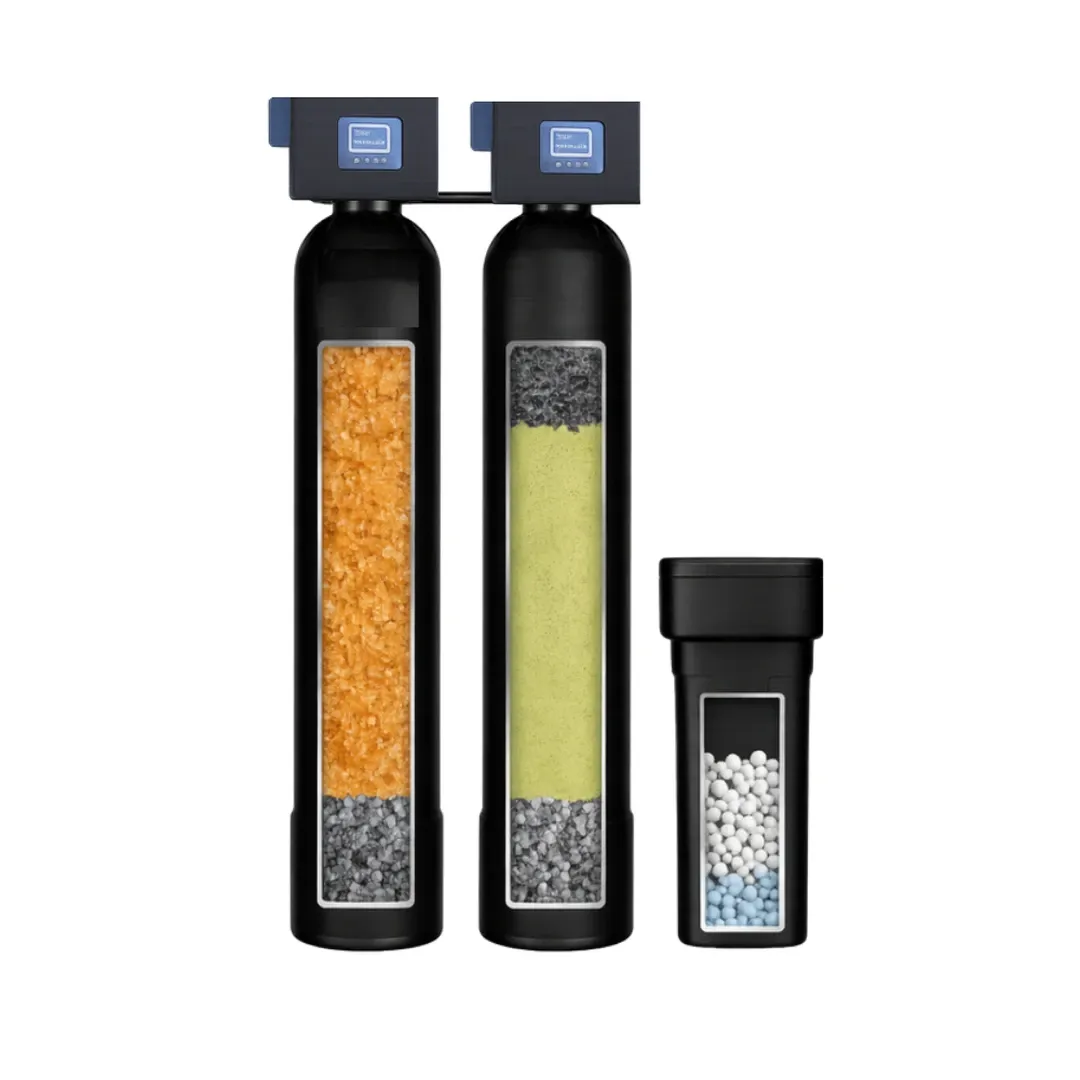
Chemical-free well-water system that clears iron, sulfur odor and hardness (iron under 6 ppm).
Regular price$6,146Sale price$3,995
Installed
35% off — ends September 30, 2026
Free reverse osmosis drinking system included
Brochure — Iron Breaker AIO (Dual Tank)Spec sheet — Iron Breaker AIO (Dual Tank)
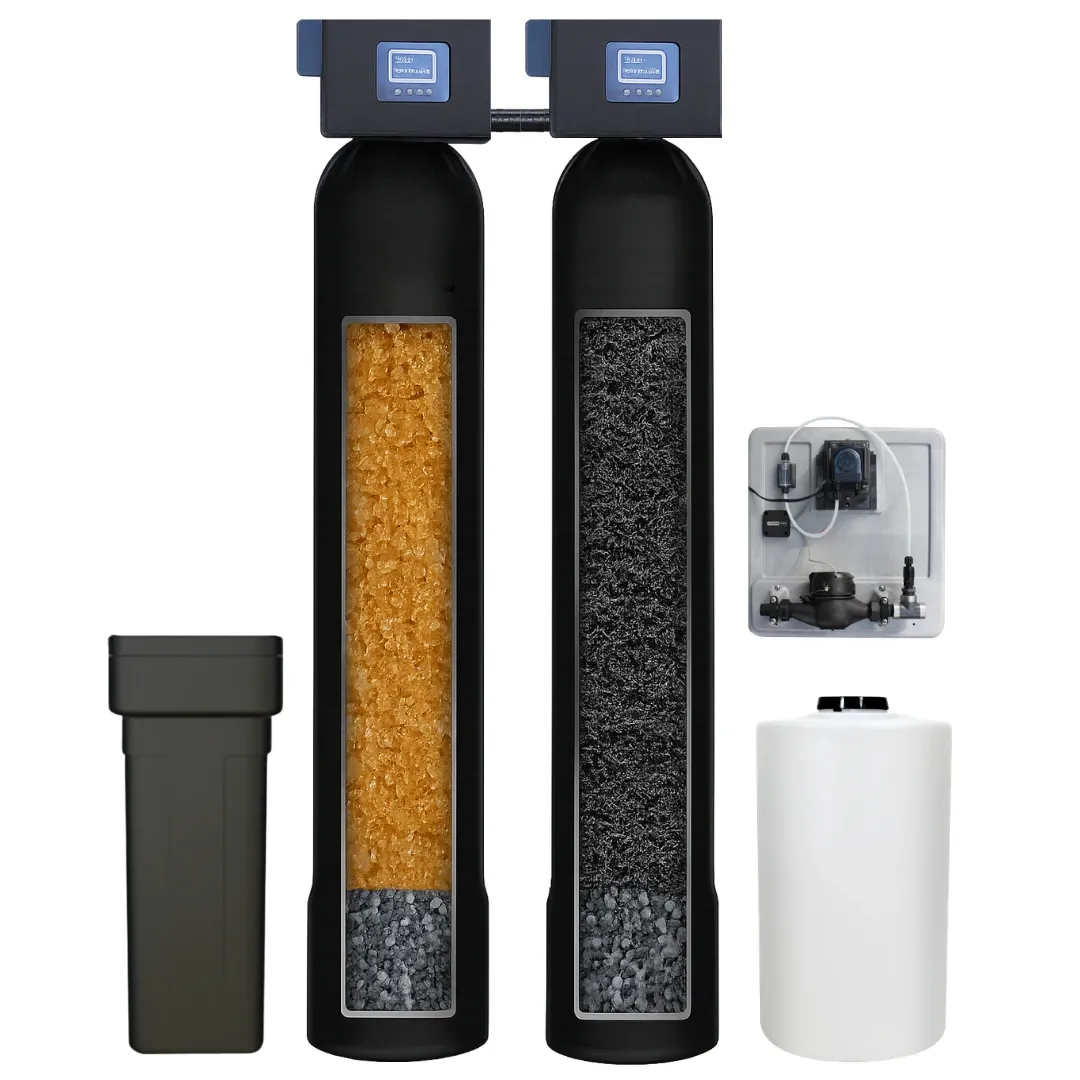
Heavy-duty well-water system for high iron and sulfur (over 6 ppm).
Regular price$8,692Sale price$5,650
Installed
35% off — ends September 30, 2026
Free reverse osmosis drinking system included
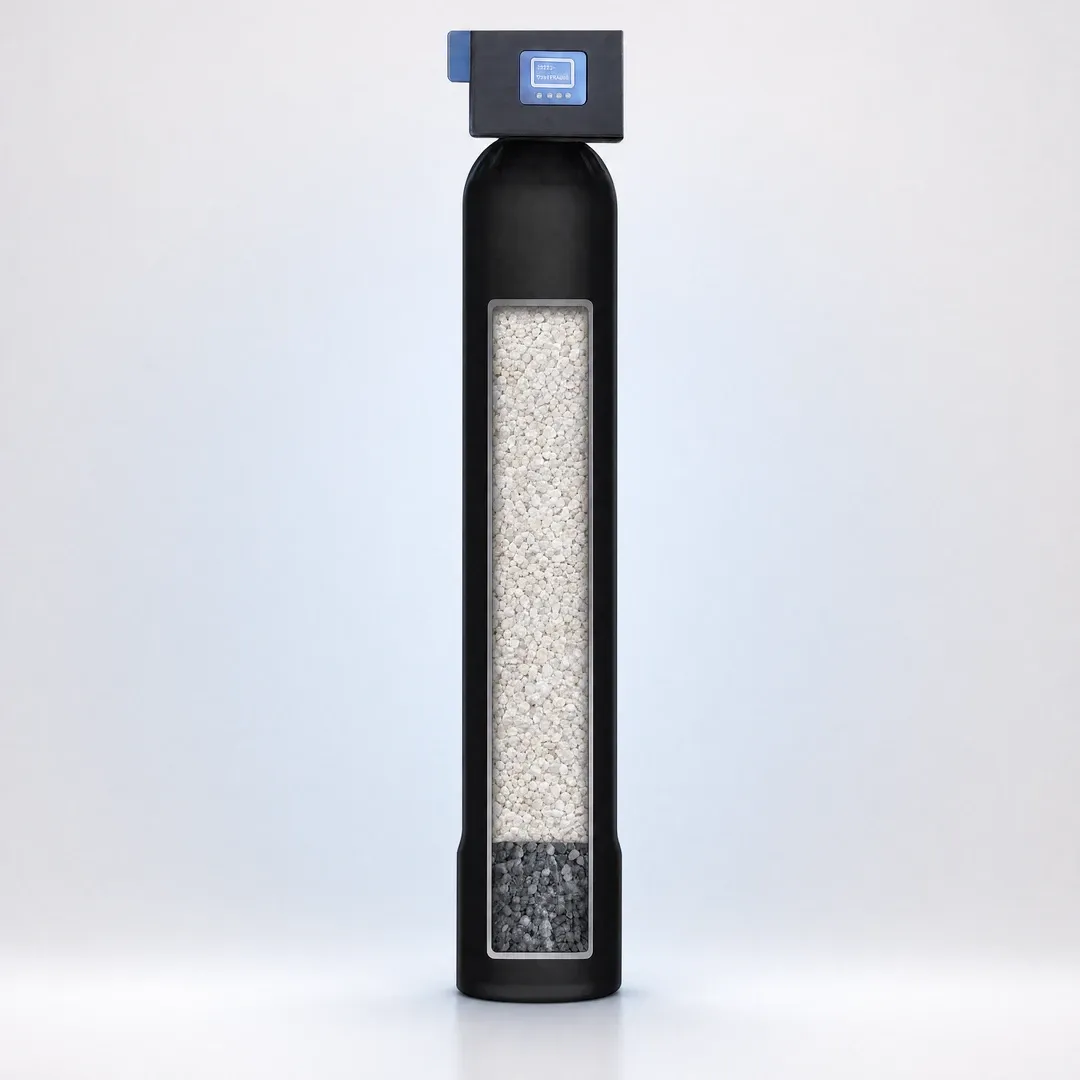
Raises acidic well water (pH 5.0–7.0) to protect pipes, fixtures and appliances.
Regular price$3,922Sale price$2,549
Installed
35% off — ends September 30, 2026
Free reverse osmosis drinking system included
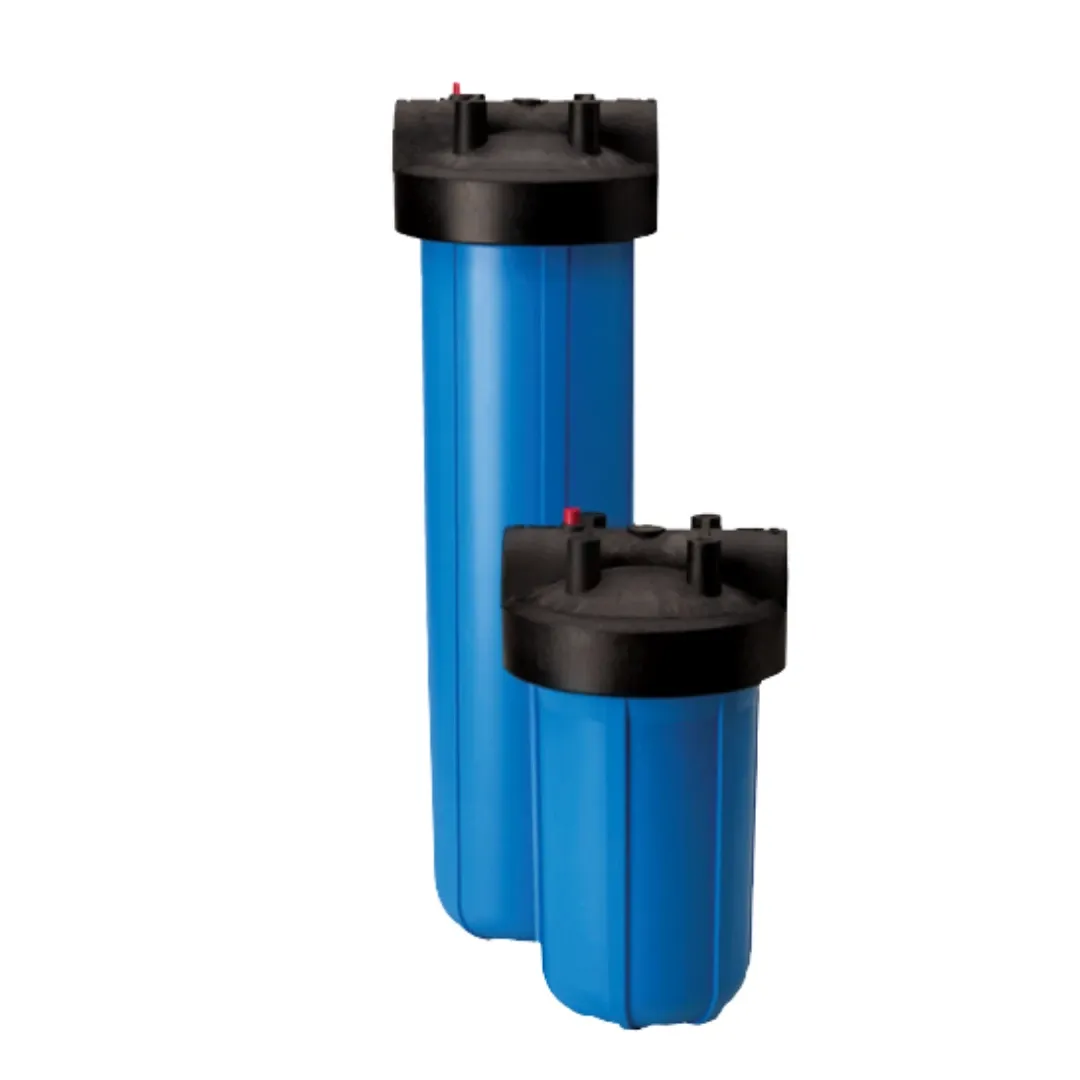
20-inch Big Blue 5-micron filter that catches sand and sediment before your main system.
Regular price$1,691Sale price$1,099
Installed
35% off — ends September 30, 2026
All prices are for a garage or accessible waterline install. Crawl space, attic, outside or trenching installs add a $399 minimum, quoted on-site before any work begins.
Testing
A private well is not on anyone's testing schedule. No utility samples it, no annual report arrives, and nothing tells you when something changes. That is the single biggest practical difference between a well and city water, and it is why well owners are usually the ones who find problems late.
Your county environmental services department handles permitting and testing for private wells, and that is the place to start for a certified laboratory result. Our in-home test is a different thing and does not replace it: ours is free, takes about fifteen minutes at your kitchen sink, and tells us what equipment your water needs.
Where the wells are
Raleigh is our largest market, not our boundary. The well work is mostly in the counties around it, and that is deliberate.
Linked places have their own page. The rest are covered the same way. See the full service area.
Yes, and it's a meaningful share of what we do. Wells in Wake, Harnett, Chatham and Johnston counties commonly come back with iron, hydrogen sulfide, sediment or low pH. Those need genuinely different equipment than a city water home — which is why we test first instead of quoting off a price list.
It corrects acidic water. Low pH is common in NC well water, and acidic water slowly eats copper plumbing — the telltale sign is blue-green staining in sinks and tubs. A calcite neutralizer runs your water through crushed calcium carbonate, which raises the pH back to neutral. If your well tests acidic (the neutralizer is rated for inlet pH 5.0 to 7.0), this usually has to be handled before anything else.
On a well, almost always. Sand, silt and grit will shorten the life of every piece of equipment downstream of it, including your pump and your pressure tank. On city water it’s rarely necessary unless you’re on an older line or there’s been recent main work.
Mostly when you’re on a private well and bacteria is a concern. UV light neutralizes 99.9% of bacteria and microorganisms without adding anything to the water. It’s an add-on at $400 installed, it needs clear water to work — sediment has to be filtered out ahead of it — and the bulb is replaced once a year. City water is already disinfected before it reaches you, so there it is extra assurance rather than a need.
For a typical Triangle household on a properly sized softener, figure on a bag every two to three months. It depends on your hardness level and how much water you use. If you’re going through salt much faster than that, something is set wrong.
Fifteen minutes at your kitchen sink, results while we are standing there, and the iron number that decides which system you need. No obligation, and if your water is fine we will tell you.
Branden or someone on the team will call or text shortly to schedule your free water test. Need us sooner? Call or text (984) 401-8890.
Please try again in a moment, or call or text (984) 401-8890 and we will book your test by hand.